Guide
Signs You Need Foundation Repair
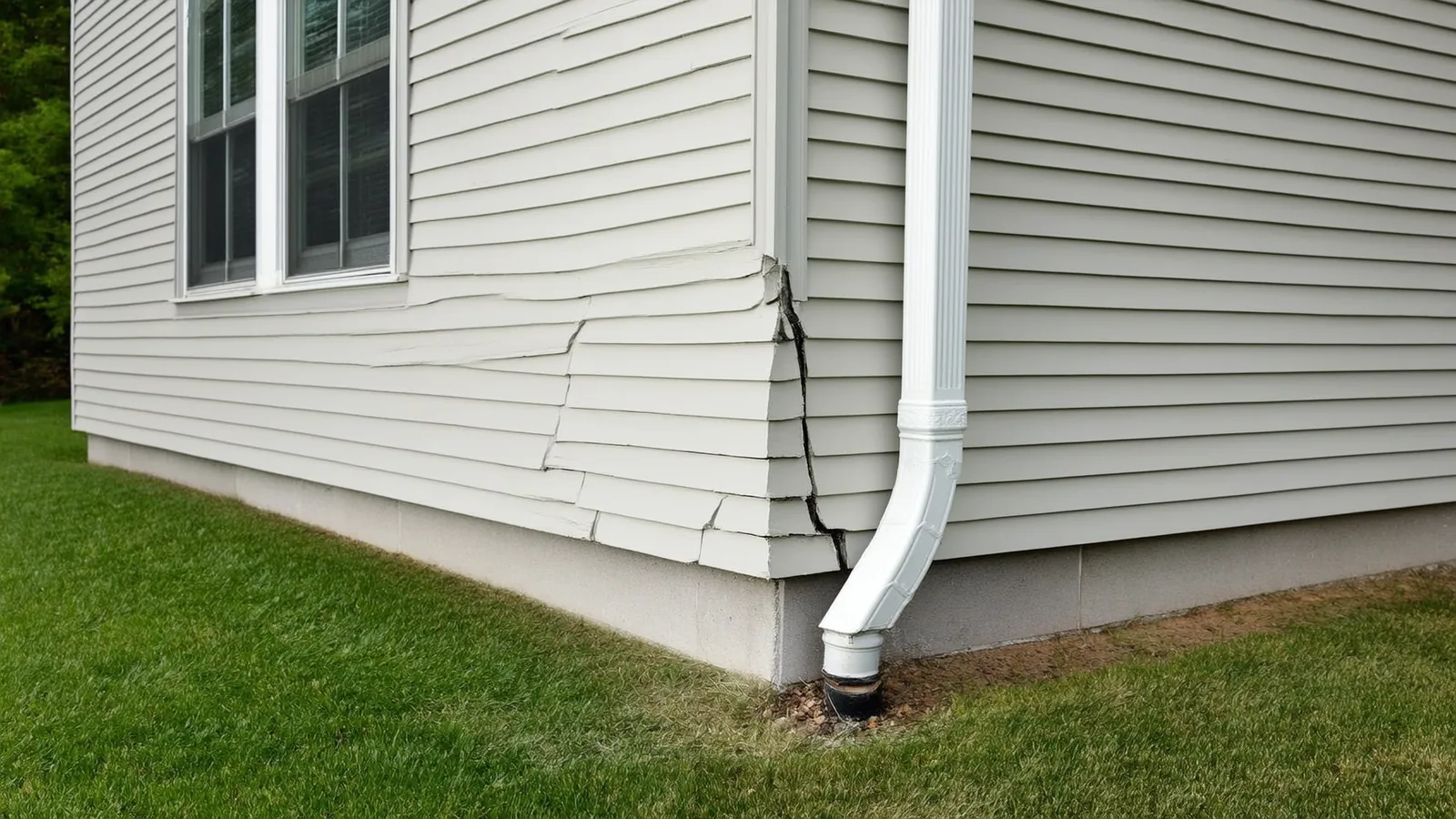
Seven signs indicate possible foundation problems, ranked by severity from least to most urgent: hairline vertical cracks in basement walls (often cosmetic), sticking doors and windows, stair-step cracks in exterior brick, sloping floors, gaps around window trim, water entering the basement after rain, and visibly bowing basement walls. The last three are emergencies. Most homes show one or two minor signs over a lifetime without requiring major repair.
The Seven Signs, Ranked
- Hairline vertical cracks in poured concrete basement walls. Most common, usually cosmetic curing shrinkage.
- Sticking doors and windows. Often the first interior symptom of foundation settlement.
- Stair-step cracks in brick veneer or block walls. Nearly always structural.
- Sloping floors. Test with a marble or 4-foot level; over 1/2 inch slope over 10 feet is structural.
- Gaps around windows. Pattern of gap distinguishes settlement from caulk failure.
- Water in basement after rain. Hydrostatic or drainage issue requiring inspection.
- Bowing basement walls. Emergency. Inspect within 24 to 72 hours.
30-Minute Self-Inspection Walk-Through
Exterior pass
- Walk the full perimeter looking at brick and block walls
- Note any stair-step cracks, especially at corners
- Check separation between home and chimney, porch, or attached garage
- Check exterior window and door trim for visible gaps
- Note location of downspouts; are they discharging at the foundation?
Interior pass
- Test every interior door, especially in older parts of the home
- Check drywall at corners of door and window frames for cracks
- Roll a marble across each room floor to check for slope
- Check basement walls for cracks, water staining, efflorescence (white powder)
- Note any musty smell or visible mold in the basement or crawlspace
When to Act
| Finding | Action |
|---|---|
| One or two hairline vertical cracks only | Monitor every 6 months |
| Sticking doors, no other signs | Likely humidity, monitor seasonally |
| Stair-step cracks in brick | Inspect within 2 weeks |
| Sloping floor 1/2+ inch over 10 ft | Inspect within 30 days |
| Bowing wall (any deflection) | Inspect within 72 hours |
| Active basement water | Inspect within 2 weeks |
| Two or more signs together | Inspect within 2 weeks |
One caution on scope: under the ASHI Standards of Practice, a standard home inspection covers structural components including the foundation, but home inspectors are not required to provide engineering analysis or offer opinions on structural adequacy. Judgment calls beyond this triage table belong with a foundation contractor or structural engineer.
Chattanooga-Specific Warning Sign Patterns
The general 7-sign list applies to all homes. Chattanooga homeowners benefit from knowing which symptoms cluster most often given the local terrain and housing stock.
Hillside settlement: doors that stick by season
Homes on Signal Mountain, Lookout Mountain, and Missionary Ridge sometimes show seasonal door-sticking that worsens in dry summer months and improves after wet seasons. This pattern is associated with clay shrinkage under hillside foundations rather than progressive settlement, and the symptom may come and go for years before becoming permanent. Notice the seasonality; mention it during inspection.
Crawl-space symptoms that show up above floor
Chattanooga’s high crawl-space prevalence means many foundation symptoms surface as floor-level issues: bouncy floors, gaps where wood flooring meets walls, doors that close but with uneven gap, and unexpected sounds (creaks, pops) as foundation supports shift below. These often indicate pier or beam issues that can only be confirmed from the crawl-space.
Pre-1960 basement homes: efflorescence as the early signal
Older Chattanooga basements in North Shore, Highland Park, and the historic districts often show white efflorescence (mineral deposits from water passing through masonry) before active water intrusion is visible. Efflorescence on basement walls usually precedes wall-crack development by months or years. Notice it, photograph it, ask the inspector to address whether it’s progressing.
Questions
Signs You Need Foundation Repair FAQs
What are the signs you need foundation repair?
What are the first signs of foundation damage?
How can I check my foundation myself?
When should I call a foundation expert?
Free inspection
Talk to a foundation specialist
On-site inspection with elevation survey. Written diagnosis within 24 hours. No obligation.