Symptom · Structural
Sloping Floors
Sloping floors are typically a foundation-settlement symptom. The residential threshold for structural concern is 1/2 inch of drop over a 10-foot span, measured with a 4-foot level or by rolling a marble across the floor. Slope under 1/4 inch over 10 feet may be original construction tolerance. Slope over 1 inch is active settlement requiring near-term repair. Repair cost typically $5,000 to $20,000 depending on foundation type and severity.
Sloping Floors foundation repair in Chattanooga
Sloping floors are typically a foundation-settlement symptom. The residential threshold for structural concern is 1/2 inch of drop over a 10-foot span, measured with a 4-foot level or by rolling a marble across the floor. Slope under 1/4 inch over 10 feet may be original construction tolerance. Slope over 1 inch is active settlement requiring near-term repair. Repair cost typically $5,000 to $20,000 depending on foundation type and severity.
Free written inspection
Get my free inspection →Same-day inspections in most cases. No-obligation written quote.
Symptom details
Understanding sloping floors
How to Test for Sloping Floors
Marble test
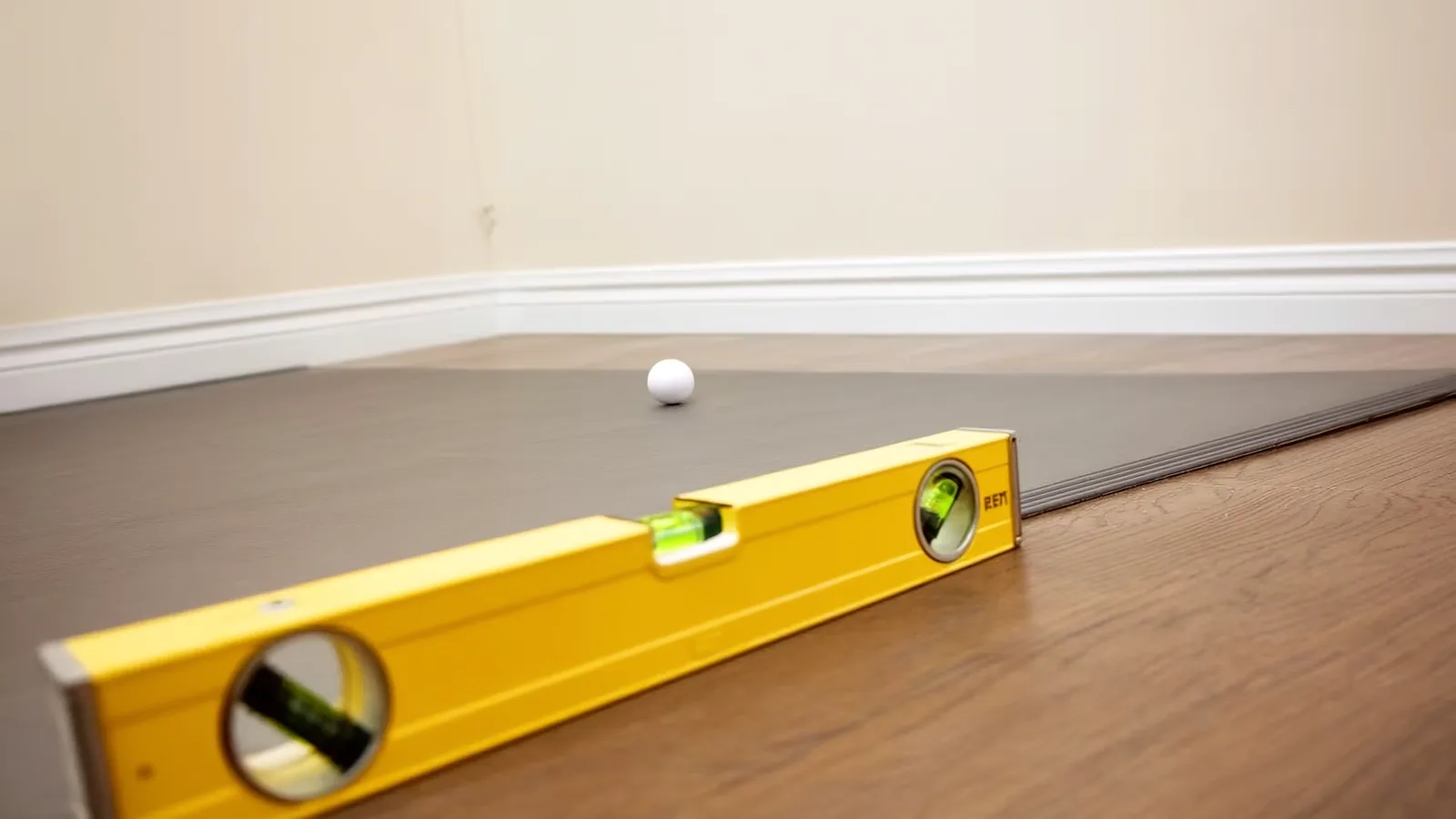
Set a marble or small ball on the floor in the middle of a room. If it rolls slowly toward one direction, the floor slopes that way. The faster it rolls, the steeper the slope. This is a quick first check that costs nothing.
4-foot level
Lay a 4-foot level on the floor in several positions. Measure any gap between the level and the floor at the low end. Move the level around the room to find where the slope is steepest. Convert the per-4-foot reading to a per-10-foot reading by multiplying by 2.5.
Laser line
A construction laser projected across the floor gives the most accurate slope reading. Foundation contractors use these during inspection to map the entire floor’s elevation pattern.
Slope Severity Thresholds
| Slope over 10 feet | Interpretation | Action |
|---|---|---|
| Under 1/4 inch | Construction tolerance, often original | Monitor every 12 months |
| 1/4 to 1/2 inch | Mild, may be original or minor settlement | Inspect within 60 days |
| 1/2 to 1 inch | Structural threshold, foundation work indicated | Inspect within 30 days |
| Over 1 inch | Active settlement progressing | Inspect within 2 weeks |
Repair Approach by Foundation Type
- Slab-on-grade homes: piering at the settled section + slab lift if needed. See slab foundation repair.
- Pier-and-beam homes: crawl-space access to shim or rebuild settled piers, replace rotted beams, sister sagging joists. See pier and beam repair.
- Basement homes: piering at the affected exterior wall, similar to slab approach but accessed from outside.
Sloping Floor Patterns in Chattanooga Homes
Sloping floors in Chattanooga homes correlate with foundation type and housing era. Recognizing the typical pattern for a home’s construction helps diagnose whether a slope is original tolerance or progressive settlement.
Hillside pier-and-beam settlement
Crawl-space homes on Signal Mountain, Lookout Mountain, and other hillside neighborhoods sometimes show floor slopes that originated when the home was built (some masonry piers settled in the first few years and the floor never came back to level) and have been stable since. The distinguishing test is progression: if the slope has been the same since the homeowner moved in, it is likely original. If the slope has worsened in measurable ways over the past 1 to 3 years, it is active and warrants repair.
Slab-on-grade settlement in newer suburbs
Slope developing on a slab-on-grade home built in the past 20 years is more likely to be active and progressing. Newer construction is generally built to tighter tolerances, so observable slope indicates real settlement rather than original construction variance. Marble-test slope over 1/2 inch over 10 feet on a home this age warrants prompt inspection.
Older basement-foundation slope (Highland Park, North Shore historic districts)
Pre-1940 basement homes in Chattanooga’s historic districts sometimes have main-floor slopes that originated when the home settled in its first decade and stabilized. These are usually visible in the same areas as exterior brick cracks (where the historical settlement was concentrated). Distinguishing historical from active slope on these homes requires measurement over time, since neither the homeowner nor the inspector can know from a single visit which it is.
Questions
Common sloping floors questions
Are sloping floors always a sign of foundation problems?
What causes sloping floors?
How do you fix sloping floors?
How much does it cost to fix sloping floors?
Can I fix sloping floors myself?
Free inspection
Find out if your sloping floors is serious
On-site inspection identifies cause and urgency. Written diagnosis within 24 hours. No obligation.