Service · Chattanooga
Basement Waterproofing in Chattanooga
Basement waterproofing combines interior drainage, exterior membrane application, sump pump systems, and crack injection to keep water out of basement spaces. The right combination depends on whether moisture enters through walls (hydrostatic pressure), through the wall-floor joint (saturated soil), or through specific cracks. Cost is $2,300 to $7,600 per Bob Vila's May 2024 guide. Most installations take 2 to 7 days depending on exterior vs interior approach.
Basement Waterproofing in Chattanooga: Top Guide to Drainage, Sumps & Membranes
Basement waterproofing combines interior drainage, exterior membrane application, sump pump systems, and crack injection to keep water out of basement spaces. The right combination depends on whether moisture enters through walls (hydrostatic pressure), through the wall-floor joint (saturated soil), or through specific cracks. Cost is $2,300 to $7,600 per Bob Vila's May 2024 guide. Most installations take 2 to 7 days depending on exterior vs interior approach.
Free written inspection
Get my free inspection →Same-day inspections in most cases. No-obligation written quote.
Method details
More on basement waterproofing
The Four Components of Basement Waterproofing
Basement waterproofing is best understood as a toolkit rather than a single product. Most jobs combine two or three of the following components based on what the inspection reveals about the water-entry path.
1. Interior perimeter drainage
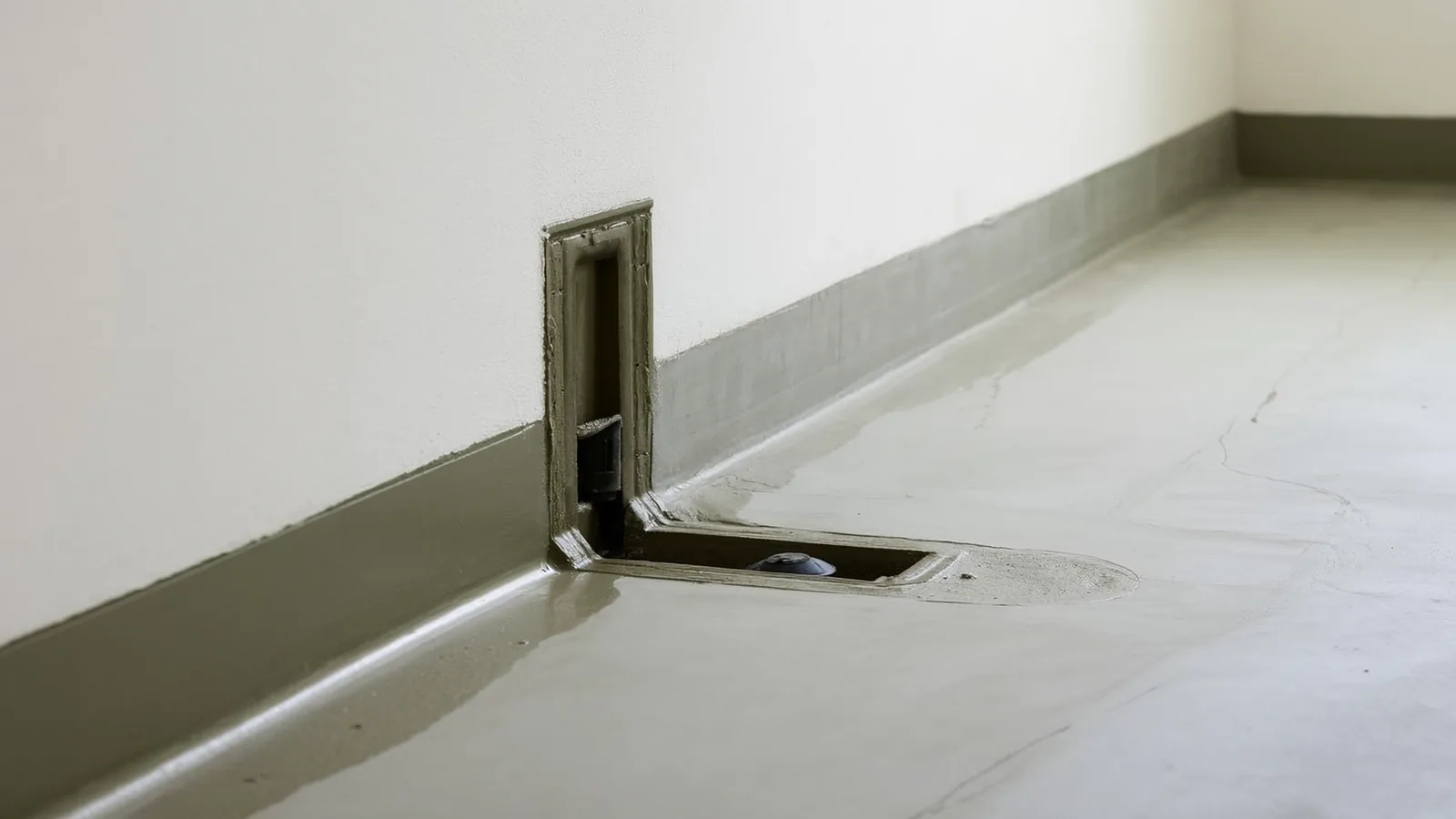
A drain channel installed at the wall-floor joint along the interior perimeter of the basement collects water that enters at that joint and routes it to a sump basin in the lowest point of the floor. A sump pump then discharges the water outside, well away from the foundation. Interior drainage is the most-used component because the wall-floor joint is the most common water-entry path on existing basements. Installation requires saw-cutting a channel in the concrete floor, installing the drain tile, and refinishing the concrete.
2. Exterior waterproofing membrane
A rubberized or polymer-modified asphalt membrane applied to the outside of the basement wall, typically combined with a drainage board that channels water down to a footing drain. Installation requires excavating around the foundation to wall depth, applying the membrane, installing drainage board and footing drain, and backfilling. Exterior waterproofing is the most thorough approach because it prevents water from contacting the wall at all, but it is the most labor-intensive and disruptive option.
3. Sump pump system
A pump installed in a sump basin in the basement floor to collect and discharge water. Most installations use a primary electric pump with a battery-backup secondary pump for power-failure scenarios. Sump pumps need replacement every 7 to 10 years; the basin and discharge line typically last decades.
4. Crack injection
Flexible polyurethane resin injected into vertical wall cracks to seal them against water intrusion while maintaining some flexibility for normal seasonal movement. Best for stable hairline cracks where the cause is settled and water entry through the crack is the only remaining issue. Not appropriate for horizontal cracks (which indicate active hydrostatic pressure and need exterior addressing).
Diagnosing Water-Entry Path
Effective waterproofing depends on diagnosing how water is entering before picking components. Common patterns:
| Symptom | Likely Entry Path | Recommended Component |
|---|---|---|
| Water at floor-wall joint after rain | Saturated soil pushing under footing | Interior perimeter drain + sump |
| Water seeping through wall mid-height | Hydrostatic pressure on wall | Exterior membrane or interior drainage |
| Water through a specific vertical crack | Settled crack with water finding the path | Crack injection |
| Wall bowing with horizontal crack | Soil pressure exceeding wall capacity | Structural reinforcement before waterproofing |
| Persistent humidity, no visible water | Vapor diffusion through walls | Vapor barrier + dehumidifier |
| Efflorescence on walls | Water moving through masonry, depositing salts | Address water source first, then surface treatment |
Basement Waterproofing vs Crawl Space Repair
Both methods address moisture in below-grade spaces. The difference is the foundation type the home actually has.
- Basement waterproofing applies to homes with a full basement: poured concrete or block walls extending typically 8 feet below grade, a concrete floor, and a finished or unfinished space inside.
- Crawl space repair applies to homes with a ventilated crawlspace below the first floor: short walls (often 2 to 4 feet tall), exposed soil or vapor-barrier floor, and a space designed for ventilation rather than occupancy.
Cost Range
Per Bob Vila’s May 2024 cost guide, basement waterproofing runs $2,300 to $7,600 per project. Component cost ranges:
- Crack injection only: under $1,000 typical
- Interior perimeter drain + sump pump: $3,000 to $6,000
- Exterior excavation + membrane: $5,000 to $7,600 and up depending on foundation perimeter
- Full system combining multiple components: at or above $7,600
Project Timeline
- Crack injection alone: 1 day
- Interior drainage + sump installation: 2 to 4 days
- Exterior membrane application: 4 to 7 days
- Full multi-component system: 5 to 10 days
Questions
Common basement waterproofing questions
What is basement waterproofing and how does it work?
When is basement waterproofing the right choice?
How much does basement waterproofing cost?
How long does basement waterproofing last?
Basement Waterproofing vs Crawl Space Repair, which is better?
Free written quote
Ready for your basement waterproofing quote?
On-site inspection with elevation survey. Written quote within 24 hours. No obligation.