Service · Chattanooga
Polyurethane Foam Leveling in Chattanooga
Polyurethane foam leveling lifts settled concrete by injecting a two-part expanding foam through 5/8-inch holes drilled in the slab. The foam combines at the injection point, expands about 25 times its liquid volume to fill voids and raise the slab, then cures rigid within roughly 15 minutes. Lightweight (2 to 4 lb per cubic foot), precise (1/8 inch lift accuracy), and best suited to soft soils, interior lifts, and applications where weight matters.
Polyurethane Foam Leveling in Chattanooga: Top Concrete Lifting Guide
Polyurethane foam leveling lifts settled concrete by injecting a two-part expanding foam through 5/8-inch holes drilled in the slab. The foam combines at the injection point, expands about 25 times its liquid volume to fill voids and raise the slab, then cures rigid within roughly 15 minutes. Lightweight (2 to 4 lb per cubic foot), precise (1/8 inch lift accuracy), and best suited to soft soils, interior lifts, and applications where weight matters.
Free written inspection
Get my free inspection →Same-day inspections in most cases. No-obligation written quote.
Comparison
Polyurethane Foam Leveling vs Mudjacking
| Factor | Polyurethane Foam Leveling | Mudjacking |
|---|---|---|
| Chemistry | Two-part polyurethane | Cement + water + sand slurry |
| Fill weight per cubic foot | 2 to 4 lb | ~100 lb |
| Expansion ratio | ~25x liquid volume | None (delivered as final volume) |
| Access hole size | 5/8 inch | 1.5 to 2 inches |
Method details
More on polyurethane foam leveling
How Polyurethane Foam Leveling Works
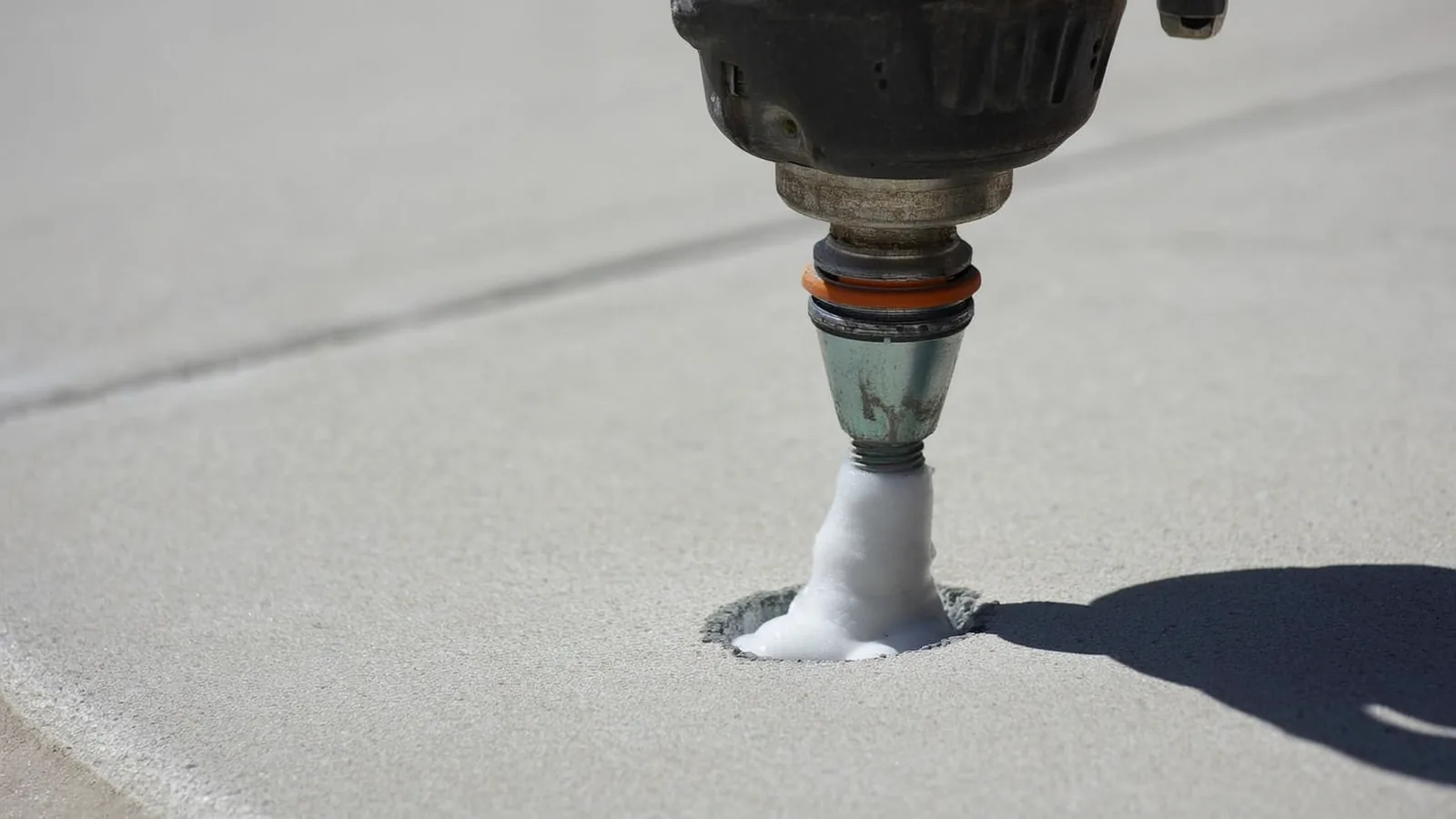
The procedure starts with the installer drilling small access holes, typically 5/8 of an inch in diameter, through the settled concrete in a grid pattern. A specialized injection gun mixes two foam components (an A-side isocyanate and a B-side polyol) at the gun tip and dispenses the resulting liquid mix through a port in the slab. The two chemicals immediately react and expand, generating roughly 25 times the original liquid volume in finished foam.
As the foam expands beneath the slab, it first fills any voids that have formed (from soil erosion, washout, settling fill). Once voids are full, continued expansion creates the upward pressure that lifts the slab. The installer monitors elevation in real time and stops injection at each port when the slab is at target elevation. The foam reaches rigid, load-bearing cure within about 15 minutes of injection. The 5/8-inch access holes are then patched with a small amount of mortar or epoxy.
Foam chemistry
The two-part foam is closed-cell rigid polyurethane similar to spray foam insulation in chemistry, but engineered for higher density and load-bearing capacity. Cured foam typically weighs 2 to 4 pounds per cubic foot. By comparison, the cement-based slurry used in mudjacking weighs roughly 100 pounds per cubic foot, so the same volume of fill produces about 25 to 50 times less load on the underlying soil with foam.
When to Pick Foam Leveling
Foam leveling is the right method when one or more of the following conditions apply:
- Soft or compressible underlying soil. Where the soil cannot support the added weight of cement slurry, foam’s lightweight fill avoids creating new settlement.
- Interior slabs where weight matters. Basement slabs, ground-floor garage slabs, and interior commercial floors where added structural load is a concern.
- Precision lift requirements. Matching an adjacent fixed slab to within an eighth inch, leveling a basement floor for vinyl plank installation, lifting a sidewalk to meet ADA tolerances.
- Fast return to service. Hospitals, garages with active vehicle use, businesses that cannot close for 48 hours of slurry cure.
- Small access holes preferred. Decorative slabs, stamped concrete, polished basement floors where 1.5-inch mudjacking holes would be visually disruptive.
Foam Leveling vs Mudjacking
Both methods lift settled slabs. The right choice depends on what you are lifting and what is beneath it.
Detailed comparison from the mudjacking side is on the mudjacking page.
Project Timeline
Foam leveling is typically a single-day job, often 2 to 4 hours on site for residential driveways, sidewalks, garage floors, or basement slab sections. The 15-minute cure time means the slab is usable for foot traffic almost immediately after the last injection port is patched. Vehicle traffic on driveway lifts can resume same-day in most cases.
Cost
Per Bob Vila’s May 2024 cost guide, slab-lifting methods including foam leveling fall in the general $500 to $1,300 per area range for typical residential projects. Foam costs more per cubic foot of finished fill than cement slurry but uses much less volume because of the expansion ratio. The actual quoted price depends on lift area, lift height, and total cubic feet of foam required.
Questions
Common polyurethane foam leveling questions
What is polyurethane foam leveling and how does it work?
When is polyurethane foam leveling the right choice?
How much does polyurethane foam leveling cost?
How long does polyurethane foam leveling last?
Polyurethane Foam Leveling vs Mudjacking, which is better?
Free written quote
Ready for your polyurethane foam leveling quote?
On-site inspection with elevation survey. Written quote within 24 hours. No obligation.