Symptom · Urgent
Bowing Basement Walls
A bowing basement wall is in active structural failure. The wall is being pushed inward by sustained hydrostatic pressure from saturated soil behind it. Deflection of 1/2 inch from plumb is the threshold for inspection. Over 1 inch is a 24-hour emergency. Repair uses carbon fiber strips, steel I-beams, or wall anchors to brace the wall, plus drainage correction to address the pressure source. Typical cost $3,500 to $12,000.
Bowing Basement Walls foundation repair in Chattanooga
A bowing basement wall is in active structural failure. The wall is being pushed inward by sustained hydrostatic pressure from saturated soil behind it. Deflection of 1/2 inch from plumb is the threshold for inspection. Over 1 inch is a 24-hour emergency. Repair uses carbon fiber strips, steel I-beams, or wall anchors to brace the wall, plus drainage correction to address the pressure source. Typical cost $3,500 to $12,000.
Free written inspection
Get my free inspection →Same-day inspections in most cases. No-obligation written quote.
Symptom details
Understanding bowing basement walls
How to Measure Wall Bow
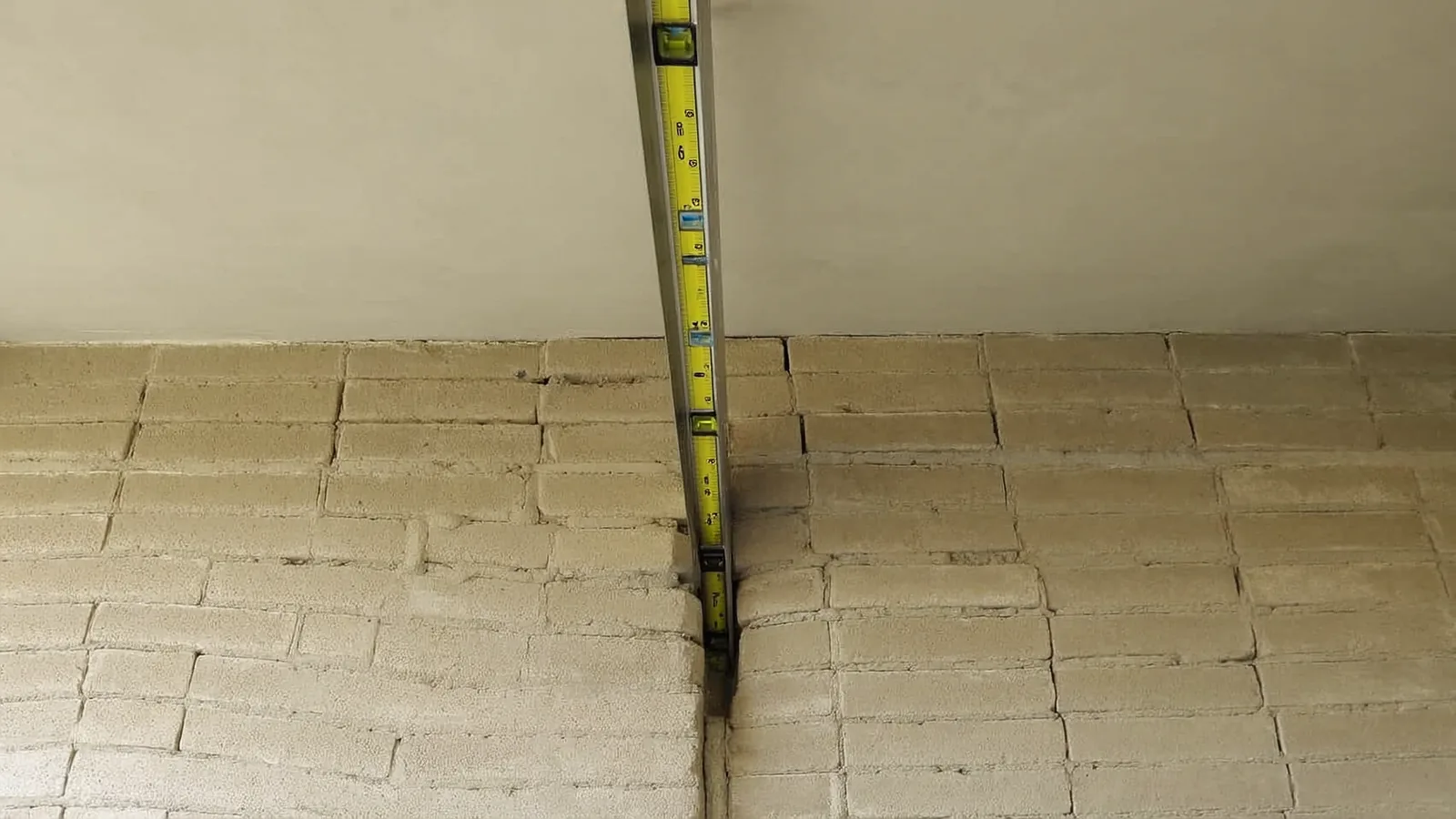
Hold a 4-foot level vertically against the basement wall at the apparent bow point. The level represents true plumb. Measure the gap between the level and the wall at the maximum bow point. That gap is the deflection. Common reference thresholds:
- Under 1/4 inch: monitor every 3 to 6 months, inspect at first opportunity
- 1/4 to 1/2 inch: professional inspection within 30 days
- 1/2 inch to 1 inch: professional inspection within 72 hours, hydrostatic pressure is active
- Over 1 inch: emergency, inspection within 24 hours, wall is at risk of structural failure
Why Walls Bow Inward
Saturated soil exerts substantial inward pressure on basement walls because the water in soil pore spaces increases lateral force on the wall [Wikipedia: Hydrostatic pressure]. Walls are restrained at the top (by the first-floor framing above) and at the bottom (by the floor slab). The maximum bending stress concentrates at mid-wall height, which is where bowing forms first. Older masonry block walls are particularly vulnerable because they were poured without modern reinforcement standards. Tennessee Valley’s 52 to 54 inches of annual rainfall keeps the pressure cycle active for several months each year.
Repair Methods
Carbon fiber strips
Vertical strips of carbon fiber fabric epoxied to the interior wall surface. Strong in tension, light, low-profile (typically under 1/8 inch thick). Suited to early-stage bowing under 2 inches. $500 to $1,200 per strip, 5 to 10 strips per wall typical.
Steel I-beam wall braces
Vertical steel I-beams installed inside the basement against the wall and anchored to the floor framing above. Heavier reinforcement, suited to more advanced bowing. Beams are visually prominent and reduce usable floor area at the wall.
Wall anchors (helical or plate)
Steel rods penetrate through the basement wall and tie back to a deadman buried in stable soil outside the foundation. Anchor plates on the inside wall surface distribute the load. Suitable when exterior space allows excavation. Sometimes used in conjunction with eventual wall straightening.
Pressure mitigation (required for all methods)
No bracing method works long-term without addressing the underlying hydrostatic pressure. Exterior drainage correction, downspout extension, regrading, and often basement waterproofing are part of every comprehensive bow-wall repair.
Questions
Common bowing basement walls questions
Are bowing basement walls always a sign of foundation problems?
What causes bowing basement walls?
How do you fix bowing basement walls?
How much does it cost to fix bowing basement walls?
Can I fix bowing basement walls myself?
Related pages
Keep researching
Free inspection
Find out if your bowing basement walls is serious
On-site inspection identifies cause and urgency. Written diagnosis within 24 hours. No obligation.