Service · Chattanooga
Mudjacking in Chattanooga
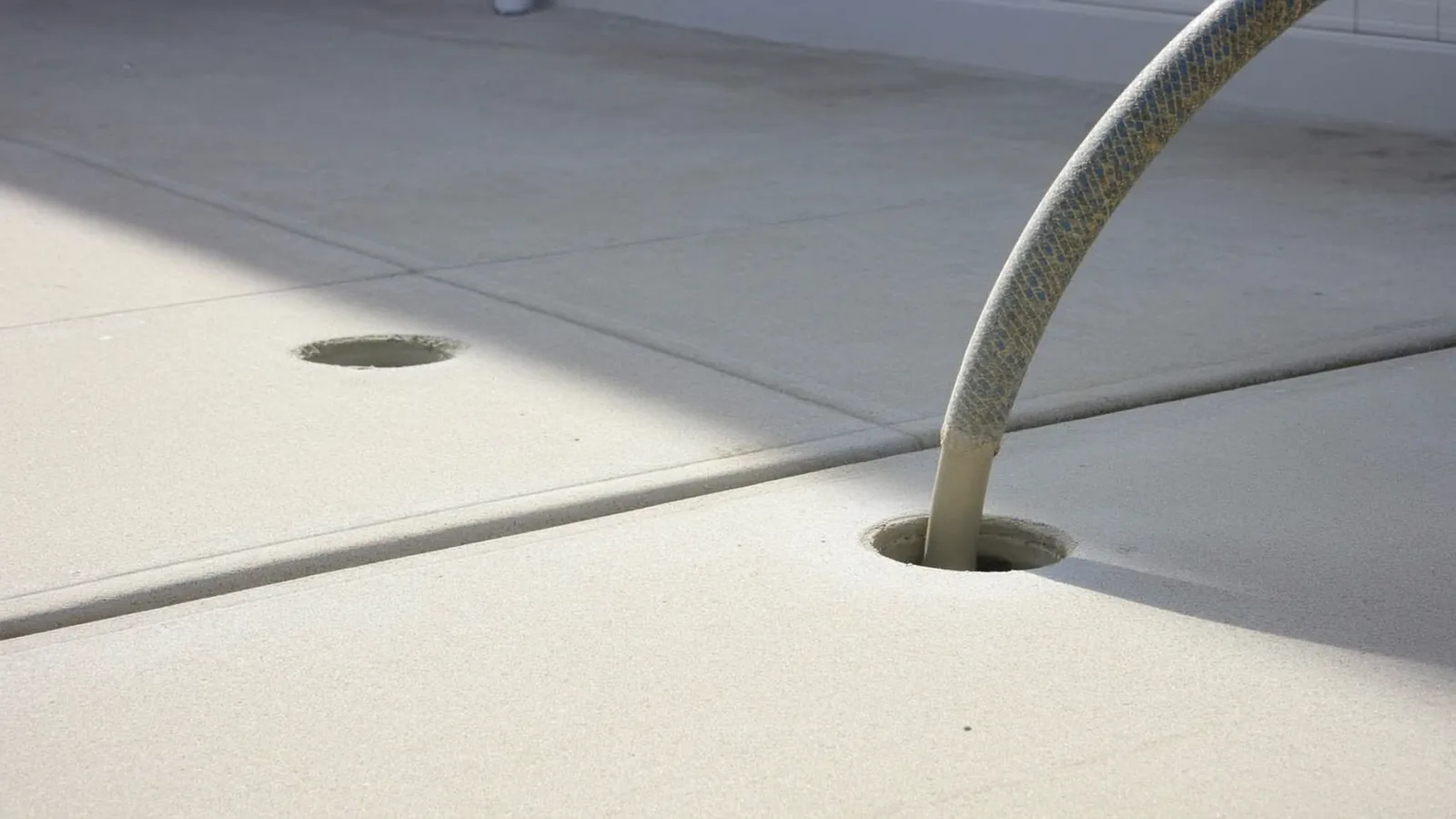
Mudjacking lifts settled concrete slabs by pumping a cement-based slurry through small holes drilled in the slab. The slurry fills voids beneath the concrete and raises the slab back to its original elevation. Best for exterior concrete: driveways, sidewalks, patios. Cost is $500 to $1,300 per area per Bob Vila's May 2024 cost guide. Installation is a single-day job with 24 to 48 hours of cure time before vehicle traffic.
Mudjacking in Chattanooga: Top Concrete Slab Lifting Guide
Mudjacking lifts settled concrete slabs by pumping a cement-based slurry through small holes drilled in the slab. The slurry fills voids beneath the concrete and raises the slab back to its original elevation. Best for exterior concrete: driveways, sidewalks, patios. Cost is $500 to $1,300 per area per Bob Vila's May 2024 cost guide. Installation is a single-day job with 24 to 48 hours of cure time before vehicle traffic.
Free written inspection
Get my free inspection →Same-day inspections in most cases. No-obligation written quote.
Comparison
Mudjacking vs Polyurethane Foam Leveling
| Factor | Mudjacking | Polyurethane Foam Leveling |
|---|---|---|
| Fill material | Cement-based slurry | Expanding polyurethane foam |
| Fill density | ~100 lb / cubic foot | ~2 to 4 lb / cubic foot |
| Access hole size | 1.5 to 2 inches | ~5/8 inch |
| Cure time | 24 to 48 hours | 15 minutes |
Method details
More on mudjacking
How Mudjacking Works
Mudjacking, sometimes called slabjacking or concrete pressure grouting, is one of the oldest slab-lifting techniques still in regular use. The procedure starts with the installer drilling a series of holes through the settled slab, typically 1.5 to 2 inches in diameter and spaced 4 to 6 feet apart in a grid pattern. A pump then forces a cement-based slurry through these holes into the space beneath the slab.
As the slurry enters, it first fills any voids that have formed beneath the concrete (from soil erosion, settling fill, or compaction over time). Once voids are full, continued pumping builds hydraulic pressure that lifts the slab. The installer monitors elevation across the slab using a string line or laser level and adds slurry progressively to bring the slab uniformly back to grade. When the slab is at the target elevation, the drilled holes are patched with mortar or concrete colored to roughly match the original slab.
Slurry composition
Traditional mudjacking slurry is a mixture of portland cement, water, sand, and sometimes clay or fly ash as a filler. The mix is engineered to flow under pressure but cure to a stable, load-bearing mass. Cured slurry has a density of roughly 100 pounds per cubic foot, which is significantly heavier than the polyurethane foam used in the foam-leveling alternative method.
When to Pick Mudjacking
Mudjacking is the right method when four conditions are met:
- Exterior concrete. Driveways, sidewalks, patios, pool decks, and concrete steps are textbook mudjacking applications.
- Supporting soil can carry the added weight. Because the slurry is heavy, the soil below must support both the original slab and the new fill weight. Loose fill or organic soils that compress under load may not.
- Lift precision under half an inch is not required. Mudjacking can hit within roughly a half-inch of target elevation. For precise lifts (matching adjacent fixed slabs to a quarter inch), foam leveling is more controllable.
- Cost is a factor. Mudjacking is the lowest-cost slab-lifting method per area.
Mudjacking vs Polyurethane Foam Leveling
Decision rule: pick mudjacking when the slab is exterior and the supporting soil is firm. Pick polyurethane foam leveling when soil is compressible, when the access holes need to be smaller, when cure time matters, or when the precision requirement is tighter than half an inch.
Project Timeline and Cure
Most residential mudjacking projects are single-day jobs:
- 2 to 6 hours of on-site work for typical residential slab sizes
- Foot traffic is fine within hours of completion
- Vehicle traffic must wait 24 to 48 hours for full cure
- Rain during the cure window can wash out unstable slurry and is the main weather concern
Cost
Per Bob Vila’s May 2024 cost guide, mudjacking runs $500 to $1,300 per area, with most residential single-area projects falling near the middle of the range. Per-square-foot pricing is roughly $3 to $6 depending on slab thickness, lift height, and access. See the foundation repair cost guide for full method comparison.
Questions
Common mudjacking questions
What is mudjacking and how does it work?
When is mudjacking the right choice?
How much does mudjacking cost?
How long does mudjacking last?
Mudjacking vs Polyurethane Foam Leveling, which is better?
Free written quote
Ready for your mudjacking quote?
On-site inspection with elevation survey. Written quote within 24 hours. No obligation.