Symptom · Urgent
Horizontal Foundation Cracks
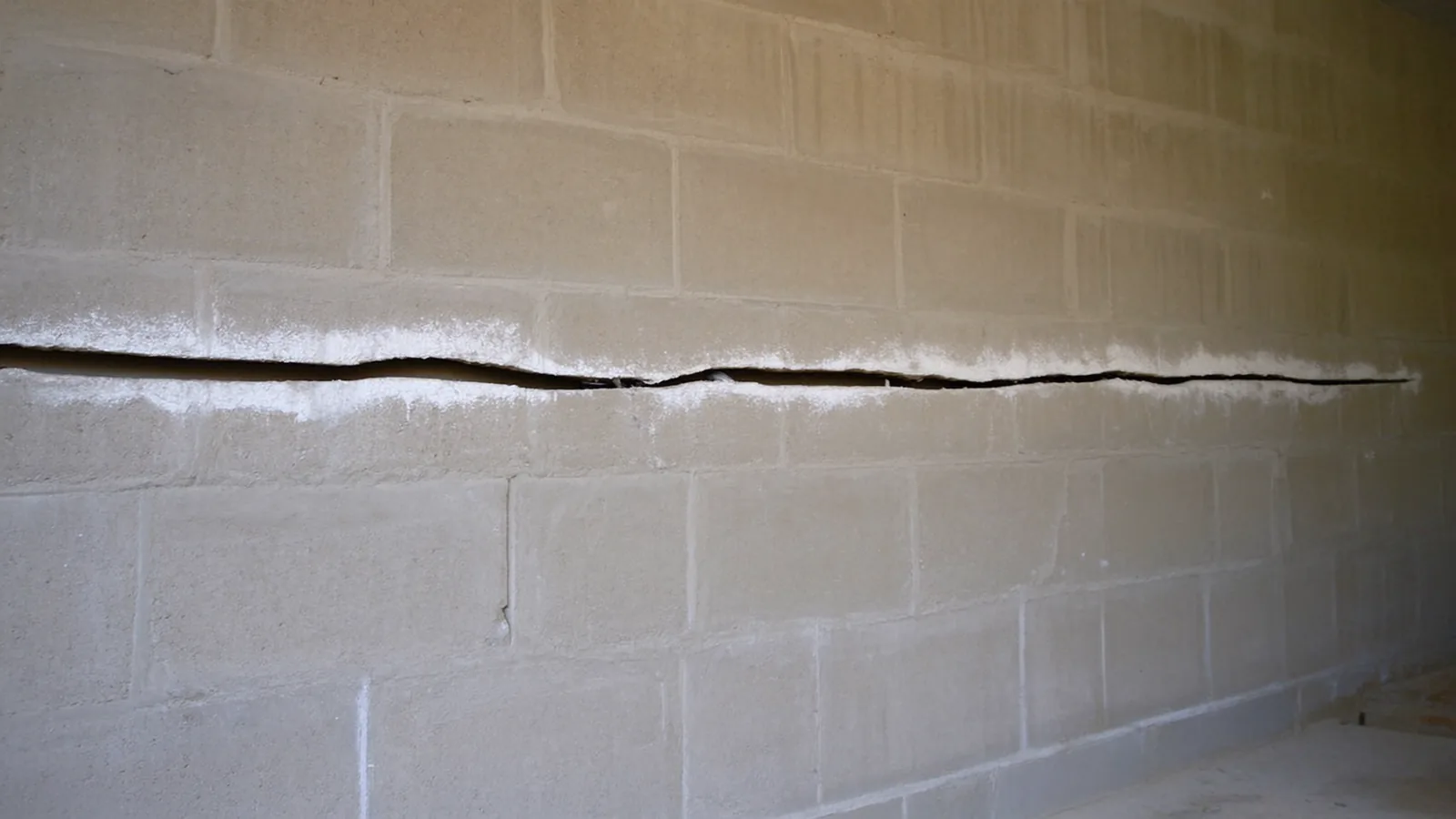
A horizontal crack across a basement wall at mid-wall height is an emergency. It indicates the wall is bending inward under hydrostatic pressure from saturated soil. Unlike vertical cracks which are often cosmetic, horizontal cracks are nearly always structural. Inspection within 24 to 72 hours is the appropriate timeline. Repair typically runs $5,000 to $12,000 because both the wall (carbon fiber or steel bracing) and the drainage system need work.
Horizontal Foundation Cracks foundation repair in Chattanooga
A horizontal crack across a basement wall at mid-wall height is an emergency. It indicates the wall is bending inward under hydrostatic pressure from saturated soil. Unlike vertical cracks which are often cosmetic, horizontal cracks are nearly always structural. Inspection within 24 to 72 hours is the appropriate timeline. Repair typically runs $5,000 to $12,000 because both the wall (carbon fiber or steel bracing) and the drainage system need work.
Free written inspection
Get my free inspection →Same-day inspections in most cases. No-obligation written quote.
Symptom details
Understanding horizontal foundation cracks
Why Horizontal Cracks Are Different
Foundation walls are designed to resist downward gravity loads from the building above. They are not designed to resist large inward forces from the side. When saturated soil exerts hydrostatic pressure against a basement wall, that lateral load tries to bend the wall inward. The wall is restrained at the top (by the floor framing above) and at the bottom (by the floor slab and footing). Maximum bending stress concentrates at mid-wall height, exactly where horizontal cracks typically form.
What “hydrostatic pressure” actually means
Saturated soil holds water in its pore spaces. The water column adds inward pressure proportional to its depth, with pressure increasing as depth increases [Wikipedia: Hydrostatic pressure]. During heavy rainfall in Tennessee Valley climates that average 52 to 54 inches of annual precipitation, soil saturation around basement walls produces sustained pressure events. Walls with adequate exterior drainage cope with this; walls without are vulnerable to gradual horizontal cracking.
Diagnostic Indicators
- Crack location. At mid-wall height, not near the floor or ceiling. This is the signature of bending failure.
- Crack direction. Runs horizontally across multiple wall sections, sometimes the full length of a basement wall.
- Wall deflection. Measured by holding a 4-foot level against the wall. A bow greater than 1/4 inch is meaningful; over 1 inch is severe.
- Water staining. Often paired with active or historical water entry through the cracked region.
- Efflorescence. White powder deposits on the wall where water has carried minerals through the masonry.
Repair Approach
Horizontal-crack repair requires three coordinated components, and skipping any one of them results in the same problem reappearing:
1. Structural reinforcement
Bracing prevents further wall bowing. Options include carbon fiber strips epoxied to the interior wall surface ($500 to $1,200 per strip, multiple strips per wall), steel I-beam wall braces installed vertically against the wall and anchored to the floor framing above, or wall anchors that tie the wall back into a stable soil mass outside the foundation.
2. Pressure mitigation
The hydrostatic pressure must be reduced. Exterior solutions include downspout extension, regrading away from the foundation, French drain installation, and exterior excavation with waterproofing membrane. Interior solutions include perimeter drainage to a sump pump. See basement waterproofing for detailed options.
3. Crack sealing
Once the structural and pressure issues are addressed, the crack itself is sealed with polyurethane injection to prevent water entry.
Related Crack Types
- Foundation cracks overview
- Vertical cracks . typically cosmetic
- Stair-step cracks . brick veneer, settlement
- Bowing basement walls . closely related, often coincident
Questions
Common horizontal foundation cracks questions
Are horizontal cracks always a sign of foundation problems?
What causes horizontal cracks?
How do you fix horizontal cracks?
How much does it cost to fix horizontal cracks?
Can I fix horizontal cracks myself?
Free inspection
Find out if your horizontal foundation cracks is serious
On-site inspection identifies cause and urgency. Written diagnosis within 24 hours. No obligation.