Symptom · Structural
Floor and Slab Cracks
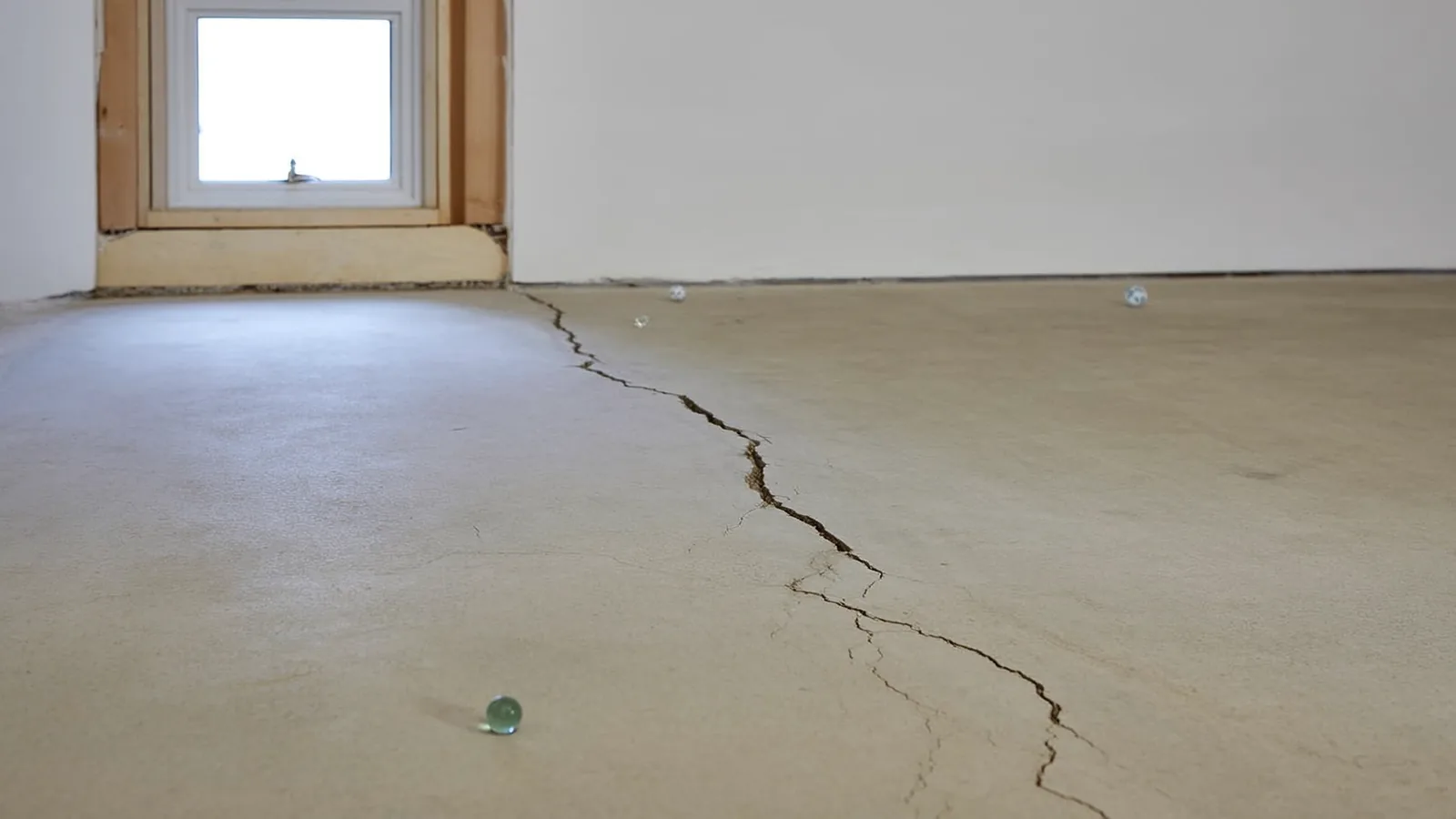
Floor cracks fall into two diagnostic categories. Hairline cracks under 1/16 inch in a slab floor, especially in a random network pattern, are typically shrinkage cracks from concrete curing and are cosmetic. Wider cracks, cracks with displacement, or recently-appeared cracks are likely settlement cracks indicating soil movement beneath the slab. Repair runs $250 to $800 for sealing cosmetic cracks, scaling to $3,500 or more for slab repair with settlement.
Floor and Slab Cracks foundation repair in Chattanooga
Floor cracks fall into two diagnostic categories. Hairline cracks under 1/16 inch in a slab floor, especially in a random network pattern, are typically shrinkage cracks from concrete curing and are cosmetic. Wider cracks, cracks with displacement, or recently-appeared cracks are likely settlement cracks indicating soil movement beneath the slab. Repair runs $250 to $800 for sealing cosmetic cracks, scaling to $3,500 or more for slab repair with settlement.
Free written inspection
Get my free inspection →Same-day inspections in most cases. No-obligation written quote.
Symptom details
Understanding floor and slab cracks
Shrinkage Cracks vs Settlement Cracks
Telling the two apart is the diagnostic key. Shrinkage cracks form during the first year after concrete is poured as the slab loses moisture and contracts. They appear in random or network patterns, are typically hairline (under 1/16 inch), and tend to be stable over time. Settlement cracks form later in the slab’s life as the supporting soil beneath shifts, typically appearing 5 to 15 years after construction. They are wider, longer, more linear, and often paired with other settlement symptoms (sloping floors, sticking doors, exterior brick cracks).
How to Tell Them Apart
| Feature | Shrinkage (cosmetic) | Settlement (structural) |
|---|---|---|
| Age of home | Cracks within first year | Cracks appear 5+ years in |
| Width | Under 1/16 inch | Over 1/16, often 1/8+ |
| Pattern | Random / network | Linear, often along beam lines |
| Displacement | None | Visible offset between sides |
| Other symptoms above | None | Sloping floors, sticking doors |
| Progression | Stable | Widens over months |
Repair Methods by Type
- Cosmetic shrinkage: polyurethane or epoxy crack injection, $250 to $800 per crack
- Settlement: slab foundation repair with piering or foam lift, $350 to $20,000 per Bob Vila
- Heave: address moisture source (often plumbing leak) before repair
Diagnosing Floor Cracks on Chattanooga’s Mixed Housing Stock
Floor crack diagnosis varies meaningfully across Chattanooga’s housing types. The same crack pattern means different things on different foundations.
Slab cracks in newer East Brainerd / Hixson construction
Slab-on-grade homes built in the past 30 years (predominant in newer East Brainerd and Hixson subdivisions) sometimes show hairline shrinkage cracks within the first 2 to 5 years that are concrete-curing artifacts and remain stable. These do not indicate foundation settlement. Wider cracks (over 1/8 inch) or cracks with visible displacement between the two sides in the same housing stock more likely indicate post-construction settlement and warrant inspection.
Basement floor cracks in older neighborhoods
Pre-1960 basement floors in North Shore, Highland Park, and the historic districts often have cracks that appeared decades ago and have been stable since. Distinguishing old stable cracks from new active ones requires comparing crack-width measurements over time. If you have moved into an older Chattanooga home and the basement floor has cracks of unknown age, baseline them with measurements now and re-measure annually.
Crawl-space floor cracks (rare but meaningful)
Crawl-space homes don’t have a floor slab below the home, but they sometimes have a poured concrete pad below the crawl-space access door or below a partial basement that’s adjacent to the crawl. Cracks here are usually settlement-related because the pad isn’t supporting the home itself. They’re worth noting during crawl-space inspection but don’t carry the same urgency as cracks in a primary foundation slab.
Questions
Common floor and slab cracks questions
Are floor cracks always a sign of foundation problems?
What causes floor cracks?
How do you fix floor cracks?
How much does it cost to fix floor cracks?
Can I fix floor cracks myself?
Free inspection
Find out if your floor and slab cracks is serious
On-site inspection identifies cause and urgency. Written diagnosis within 24 hours. No obligation.